
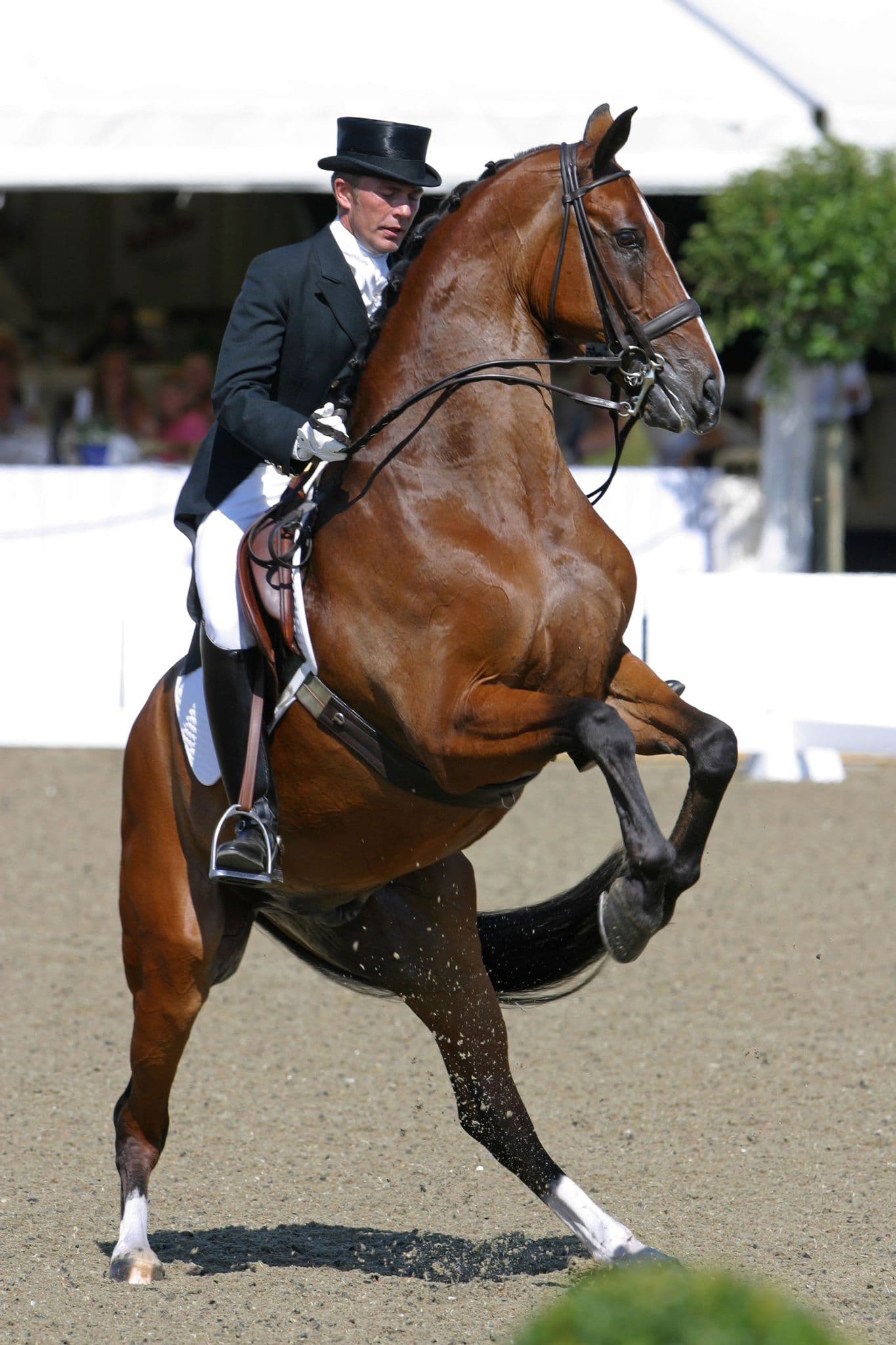
Is My Horse Being Naughty, in Pain, or in Discomfort?
Unwanted or dangerous behaviour under saddle can be frustrating and, in some cases, unsafe. When a horse begins to rear, buck, nap, spook or resist the rider’s aids, it is easy to assume the horse is being “naughty”. However, this assumption can overlook the most important question:
Is the horse reacting out of disobedience, or is it responding to pain or discomfort?
Understanding the root cause is essential for resolving the issue effectively and humanely.
Why Horses Show Behaviour That Appears “Naughty”
When a horse reacts strongly to a rider’s request, the response is often interpreted through the rider’s level of experience.
Experienced Riders
Experienced riders may respond with stronger aids, spurs or a whip, assuming the horse is being disobedient. The horse then learns that reacting leads to increased pressure.
Inexperienced Riders
Less experienced riders may become frightened and stop riding forward. The horse learns that certain behaviours result in the rider backing off or dismounting.
Both scenarios can unintentionally reinforce the behaviour, creating a cycle that becomes harder to break. Before assuming disobedience, it is essential to investigate why the behaviour is happening.
Checklist: Could Your Horse Be in Pain or Discomfort?
When behaviour deteriorates, the first step is to rule out physical causes. The following areas should be assessed systematically.
1. Environmental or Management Changes
Has the horse recently moved home?
Has the routine, turnout or herd dynamic changed?
Is the horse unsettled or stressed?
Environmental stress can significantly influence behaviour.
2. Diet and Energy Levels
Is the horse receiving too much hard feed?
Has the diet changed recently?
Is the horse on high-starch or high-sugar feeds?
Dietary imbalance is a common cause of sharpness and tension. Browse our range of feed supplements to support a balanced diet.
3. Gut Health and Internal Discomfort
Common gastrointestinal issues include gastric ulcers, hindgut discomfort, leaky gut, and microbiome imbalance. These conditions can cause girthiness, reluctance to go forward, tension and explosive reactions.
4. Hormonal Factors
Stallion-like behaviour
Mares in season
Ovarian discomfort
Tender flanks during ovulation
Hormonal changes can significantly influence sensitivity and behaviour.
5. Tack Fit: Bridle, Saddle, Bit and Girth
Poorly fitting tack is one of the most common causes of behavioural resistance. Issues include saddle imbalance, pinching tree points, incorrect gullet width, bit discomfort, girth pressure, and noseband tightness. These should be checked by qualified professionals. Find out more about our saddle fitting services.
6. Dental Health
Has the horse had a dental check within the last six months?
Was the work carried out by a BAEDT or WWAED registered professional?
Sharp points, hooks or uneven wear can cause resistance to contact, head tossing and evasion.
7. Farriery and Foot Balance
Has the farrier changed recently?
Has the trimming or shoeing style altered?
Could the horse be temporarily foot-sore?
Incorrect foot balance can create discomfort that shows up as behavioural issues under saddle.
8. Musculoskeletal Pain
This is one of the most overlooked causes of behavioural problems. Signs include back pain, sacroiliac discomfort, hock or stifle issues, soft tissue injuries, and soreness after competitions. Musculoskeletal pain often presents as “naughtiness” long before lameness becomes obvious.
Groundbreaking Research: The Ridden Horse Pain Ethogram (RHpE)
Recent research by Dr Sue Dyson has transformed our understanding of pain-related behaviour in ridden horses.
Key Findings
More than 47% of sports horses in normal work show signs of lameness that owners do not recognise.
Horses in pain display consistent, identifiable behaviours under saddle.
Treating the underlying pain causes these behaviours to reduce or disappear.
The Ridden Horse Pain Ethogram (RHpE)
The RHpE identifies 24 specific behaviours strongly associated with musculoskeletal pain. Horses showing 8 or more of these behaviours are highly likely to be experiencing discomfort. Examples include reluctance to go forward, tail swishing, head tossing, ears pinned back, repeated mouth opening, hindlimb toe dragging, and resistance in transitions.
Summary: Naughty or in Pain?
Horses rarely misbehave without reason. Behaviour is communication, and discomfort is one of the most common causes.
To determine whether your horse is in pain:
Assess management, diet and environment.
Check tack fit with qualified professionals — book a saddle fitting if needed.
Ensure dental and farriery care is up to date.
Consider gut health and hormonal factors — explore our feed supplements for gut support.
Evaluate for musculoskeletal pain using the RHpE.
When the underlying issue is identified and treated, horses typically become more willing, relaxed and compliant — to the rider’s relief and benefit.