
Equine Eosinophilic Collagenolytic Granuloma Overview, Clinical Signs, Diagnosis and Treatment
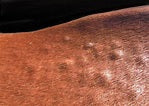
Equine eosinophilic collagenolytic granuloma (ECG), also known as equine eosinophilic granuloma, is a relatively common inflammatory skin condition in horses characterised by firm nodules within the skin. The disease is associated with eosinophilic inflammation and collagen fibre degeneration, resulting in granulomatous lesions that may appear singly or in large numbers throughout the body.
Although the condition is benign and non-cancerous, affected horses can develop extensive skin lesions that may interfere with tack placement or cause cosmetic concern.
Cause and Pathogenesis
The exact cause of equine eosinophilic collagenolytic granuloma is not fully understood, but the disease is believed to result from a hypersensitivity reaction involving eosinophils, a type of inflammatory white blood cell commonly associated with allergic responses.
Suspected contributing factors include:
Insect-bite hypersensitivity, Environmental allergens, Local trauma or pressure, Injection-site reactions, Immune-mediated inflammatory responses
Eosinophils infiltrate the skin and release inflammatory substances that damage collagen, leading to the formation of granulomatous nodules.
Clinical Signs
Lesions most commonly occur on the:
Neck, Withers, Saddle area, Back, Flanks, Trunk
Typical findings include:
Firm, raised nodules. Round or irregular masses, multiple small lumps beneath the skin. Usually non-painful lesions, minimal itching in most cases, and hair loss over affected areas in some horses
Lesions may range from a few millimetres to several centimetres in diameter. In severe cases, horses may develop dozens or even hundreds of nodules.
Some chronic lesions may become:
Ulcerated Calcified Fibrotic
Diagnosis
Diagnosis is based on clinical examination and confirmation through skin biopsy.
Veterinary Examination
The veterinarian evaluates:
Distribution and appearance of nodules, Seasonal recurrence, Presence of insect hypersensitivity, Degree of inflammation
Skin Biopsy
Histopathology is considered the definitive diagnostic method and typically reveals:
Dense eosinophilic infiltration, Collagen degeneration ("flame figures"), Granulomatous inflammation
Differential Diagnoses
Conditions that may resemble ECG include:
Habronemiasis Sarcoids Fungal infections Foreign-body granulomas Neoplasia Calcinosis circumscripta
Treatment
Treatment aims to reduce inflammation and control underlying hypersensitivity triggers.
Corticosteroid Therapy
Corticosteroids are the primary treatment and are often highly effective.
Commonly used medications include:
Prednisolone Dexamethasone Intralesional triamcinolone
Many horses show rapid improvement after treatment.
Caution
Excessive corticosteroid use may increase the risk of laminitis, particularly in predisposed horses. Careful veterinary supervision is essential.
Insect Control and Environmental Management
Because insect hypersensitivity is strongly suspected in many cases, rigorous fly control is important.
Recommended measures include:
Fly sheets and fly masks, insect repellents, stable management, reducing standing water, and avoiding peak insect activity periods
Antibiotics
Secondary bacterial infection may occur if lesions ulcerate or drain. Antibiotics may be prescribed when an infection is present.
Surgical or Local Therapy
Persistent or calcified nodules may occasionally require:
Surgical excision, Cryotherapy, Local corticosteroid injection
Prognosis
The prognosis for equine eosinophilic collagenolytic granuloma is generally good. Most horses respond well to treatment, especially when allergic triggers are controlled.
However:
Recurrence is common. Seasonal flare-ups may occur. Some horses require repeated treatment
Despite recurrence, the condition is usually manageable and rarely life-threatening.
Prevention
Preventive management focuses on minimising exposure to allergens and insects.
Helpful strategies include:
Consistent fly & insect control, routine grooming and skin inspection, prompt treatment of insect hypersensitivity, clean stable environments, and monitoring for early lesion recurrence
Conclusion
Equine eosinophilic collagenolytic granuloma is a benign inflammatory skin disease characterised by eosinophilic nodules and collagen degeneration. Although the precise cause remains uncertain, allergic hypersensitivity, particularly to insects, is thought to play a major role. Diagnosis is confirmed by biopsy, and most horses respond well to corticosteroids and environmental management. Long-term control depends largely on minimising recurrence triggers and maintaining good insect control practices.