
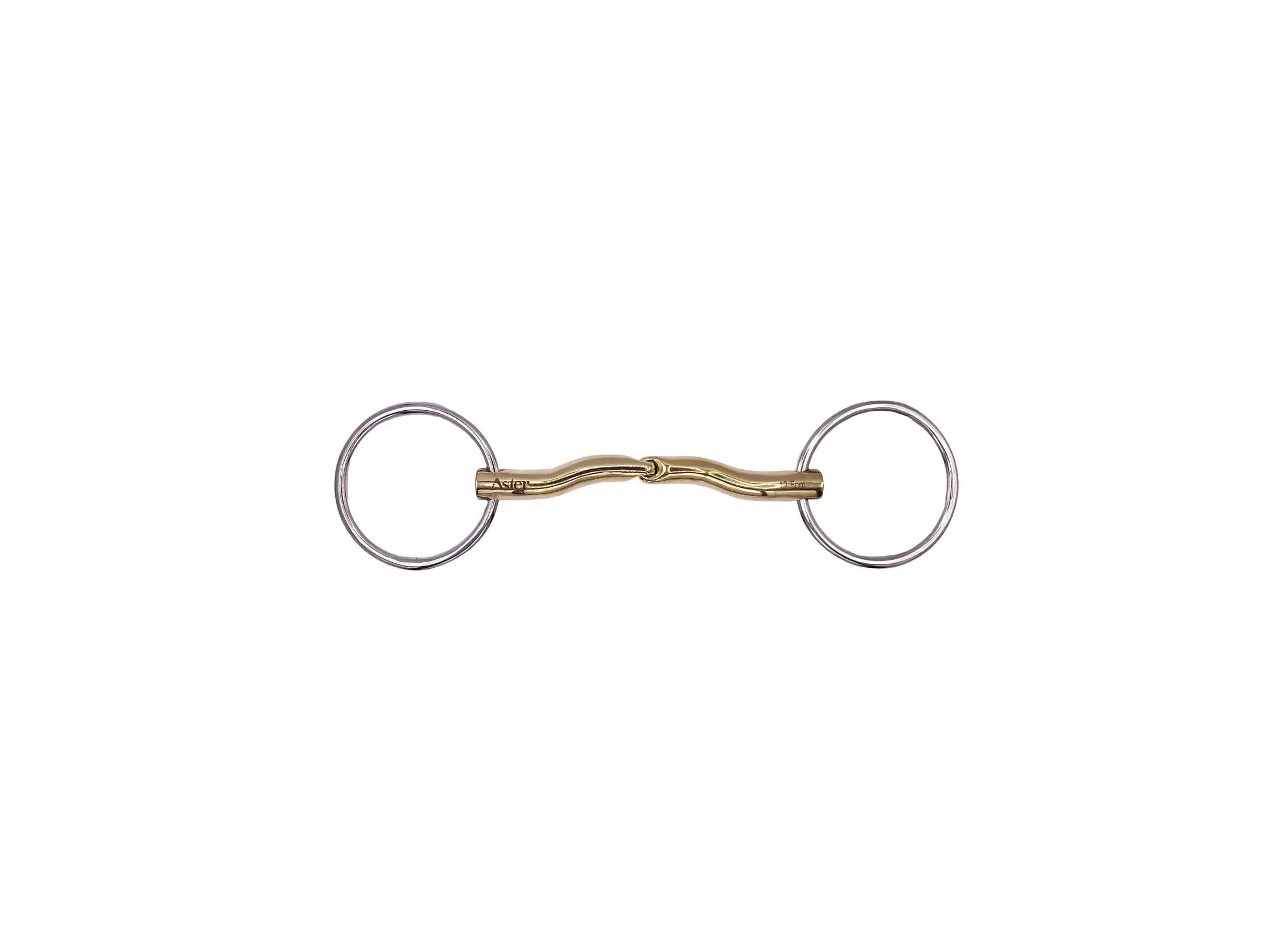

Contour Loose Ring Snaffle Bit
Anatomically Shaped for Improved Comfort and Communication
The Contour Loose Ring Snaffle combines the familiar action of a traditional single-jointed snaffle with an ergonomically curved mouthpiece that complements the horse's oral anatomy. The forward-shaped profile follows the natural contours of the mouth, providing additional tongue relief while encouraging a more even distribution of pressure across the tongue and bars within the interdental space.
By reducing concentrated pressure often associated with conventional straight single-jointed mouthpieces, the Contour encourages the horse to accept the contact more confidently and develop a softer, more consistent connection with the rider.
The loose-ring cheeks allow the mouthpiece to move freely, encouraging relaxation of the jaw while providing an immediate release of rein pressure when the rider softens the contact. This mobility promotes a lighter, more elastic feel and can help discourage horses from becoming fixed or heavy in the hand.
Key Features
-
Ergonomically curved single-jointed mouthpiece.
-
Anatomically designed to follow the natural shape of the horse's mouth.
-
Increased tongue relief compared with a conventional straight single-jointed snaffle.
-
Even pressure distribution across the tongue and bars.
-
Loose ring cheeks encourage relaxation and clear communication.
-
Responsive release of pressure to reward the horse when the contact softens.
-
Suitable for everyday schooling and competition.
Suitable For
The Contour Loose Ring Snaffle may suit:
-
Horses that are uncomfortable in conventional single-jointed snaffles.
-
Horses that lean or brace against the rider's hand.
-
Horses with a low or relatively flat palate.
-
Horses that benefit from increased tongue relief.
-
Riders seeking a softer, more sympathetic contact while retaining the familiar action of a single-jointed snaffle.
Our Advice
Correct bit fitting is just as important as selecting the right design. Every horse has unique oral conformation, and the most suitable bit should always be chosen according to the horse's anatomy, way of going and the rider's requirements. A correctly fitted bit should sit comfortably within the interdental space, allowing clear communication without unnecessary pressure.