
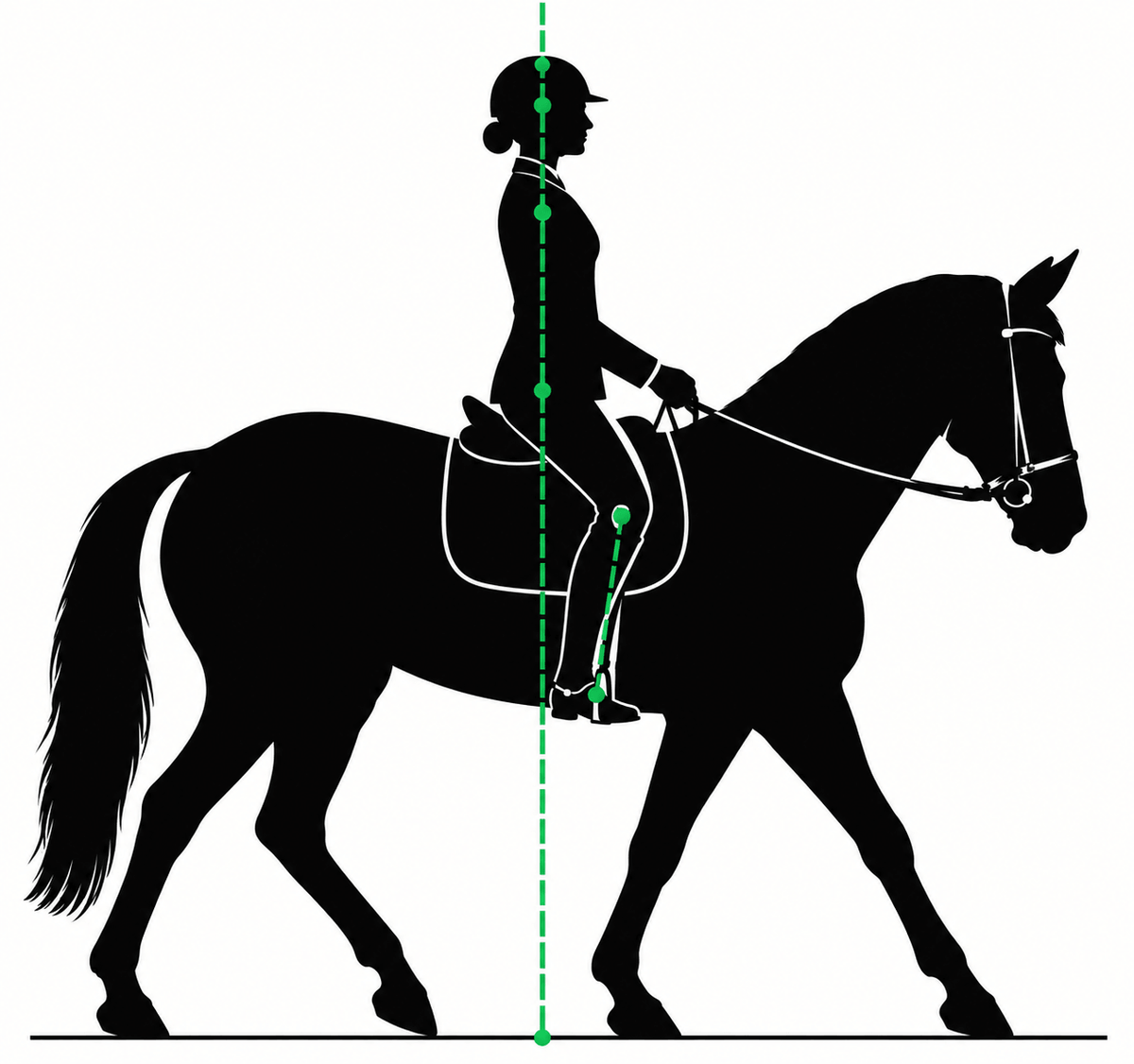
Equine Saddle Balance: The Horse, Saddle and Rider
The Horse's Back Is a Three-Dimensional Structure................................................ 4
What Can Cause Incorrect Front Gusset Contact?.................................................. 7
Pressure Distribution and Rider Compensation...................................................... 7
Shoulder Asymmetry and Saddle Rotation............................................................ 9
Flocking to Accommodate Asymmetry................................................................. 9
Static and Dynamic Saddle Assessment............................................................. 10
Understanding Saddle Balance
This guide explains how equine saddle balance affects horse comfort, saddle stability and rider position. It shows how tree width and shape, front gusset and panel contact, shoulder asymmetry, pressure distribution and saddle design can influence fit, and why both static and ridden assessment are needed to evaluate the horse, saddle and rider as one system.
This article provides general information about equine saddle balance and the interaction between horse, saddle and rider. It is not a substitute for an individual assessment by a suitably qualified saddle fitter. Persistent discomfort, marked asymmetry or changes in movement may also require advice from an appropriate veterinary or equine health professional.
Equine saddle balance describes how the horse, saddle and rider interact when a saddle is positioned correctly, distributes the rider's weight and remains stable in motion. Evaluating this relationship helps explain common saddle-fit concerns, including rocking, rotation, uneven pressure, restricted shoulder movement and rider compensation.
A balanced saddle should provide the rider with a stable platform while allowing the horse sufficient freedom of movement. It should distribute the rider's weight appropriately through the panels without creating excessive or concentrated areas of pressure.
Saddle balance is therefore much more than asking whether a saddle appears level when the horse is standing still.
The important question is:
How does the saddle behave when the rider's weight is introduced, and the horse is moving?
A saddle that appears balanced without a rider can behave very differently once loaded. Likewise, a saddle that appears to fit a stationary horse may shift when the horse walks, trots, canters, jumps or changes posture. Dynamic saddle fit therefore needs to be assessed with the rider mounted and the horse moving.
This is why saddle balance must be considered as both a static and dynamic relationship.
This information is intended to explain the principles of saddle balance and does not replace an individual assessment by a suitably qualified saddle fitter. Changes in comfort, behaviour, movement or performance may have more than one cause and should be investigated with the appropriate equine professionals.
Why Saddle Balance Matters
The saddle is the interface between horse and rider. It must accommodate the horse's anatomy while providing the rider with an appropriate position for the discipline.
A correctly balanced saddle should:
- Distribute rider weight appropriately over the available bearing area.
- Remain sufficiently stable during movement.
- Avoid excessive or concentrated pressure.
- Allow appropriate freedom through the shoulders and back.
- Provide the rider with a suitable position.
- Allow the rider to maintain balance without excessive compensation.
- Enable effective communication through the aids.
When these elements work together, the rider can remain balanced while allowing the horse to move underneath them.
When they do not, both horse and rider may compensate.
The Horse's Back Is a Three-Dimensional Structure
A horse's back is not a flat or static surface.
Saddle fit must consider both the longitudinal shape of the back — from front to rear — and the transverse shape, which describes the width and curvature across the horse's back.
The tree therefore needs to accommodate the horse's:
- Back length.
- Longitudinal curvature.
- Back width.
- Ribcage shape.
- Wither profile.
- Shoulder shape.
- Scapular position.
- Changes in shape from the front of the saddle towards the rear.
A saddle can have an apparently suitable length while still being unsuitable because the tree does not provide the correct width, angle or shape for the horse.
Tree Width and Saddle Stability
Tree width is important because the tree needs to follow the horse's shape both longitudinally and perpendicular to the spine.
A saddle that is too narrow for the horse may sit within the horse's natural back width rather than appropriately accommodating it. This can affect stability, causing the saddle to rock, move laterally or rotate as the horse moves.
Possible consequences include:
- Rocking.
- Lateral movement.
- Rotation.
- Movement during transitions.
- Changes in panel pressure.
- Increased restriction around the shoulder.
- Changes in rider position.
However, width cannot be considered independently from tree shape.
Two saddles with the same nominal width may fit very differently because their tree heads, angles, and overall geometry differ.
Tree Shape Is More Than Width
Tree width is only one component of saddle fit.
The tree also has a particular:
- Head angle.
- Head shape.
- Longitudinal profile.
- Transverse profile.
- Curvature.
- Rail geometry.
- Relationship between its front and rear sections.
The correct tree therefore needs to match the three-dimensional shape of the individual horse.
A horse may not simply require a "wider" or "narrower" saddle. It may require a particular combination of width, angle and shape.
This becomes particularly important at the front of the saddle.
The Front of the Saddle and the Tree Head
The front of the saddle needs to accommodate the horse's shoulder and scapula.
The tree head and the way the tree begins to fall away towards the shoulder need to correspond with the horse's individual conformation.
The front panels or gussets should lie appropriately against the horse rather than concentrating pressure in one area.
The relationship between the tree head, channel and front gusset is therefore critical.
A saddle may have a seemingly appropriate width but still have the wrong head shape or angle for the horse.
Understanding Front Gusset Contact
One useful way of visualising front gusset contact is to place your hand vertically against the horse's side immediately behind the scapula.
With the palm lying flat against the horse, the hand represents a broad, distributed contact surface.
Now imagine lifting the palm slightly while keeping the fingers against the horse. The fingers experience greater pressure while the palm loses some contact.
This provides a useful analogy for what can happen when the front gusset does not follow the horse's surface correctly.
Pressure may become concentrated higher up towards the top of the shoulder while the lower part of the gusset provides less support.
This can indicate that the saddle is not correctly following the three-dimensional shape of the horse.
What Can Cause Incorrect Front Gusset Contact?
Excessive pressure towards the upper shoulder may indicate an unsuitable gullet or tree width, an inappropriate tree-head angle, an unsuitable tree shape or panel configuration, incorrect flocking, or a combination of several fitting problems.
Changing a gullet bar may sometimes improve the relationship between the tree and horse, but it does not necessarily correct an unsuitable tree shape.
Width and shape are related, but they are not the same thing.
This is why saddle fitting needs to consider the whole saddle rather than attempting to correct every problem through one adjustment.
The Scapula and Shoulder Movement
The scapula is not stationary.
During locomotion it moves as part of the horse's forelimb mechanics, while the horse's back and thoracic region change throughout the stride.
The saddle therefore needs to accommodate movement rather than simply fitting a stationary shape.
A saddle that looks acceptable while the horse is standing may behave differently once the horse begins moving, making ridden assessment particularly important.
Pressure Distribution and Rider Compensation
The rider's weight is transferred through the saddle and ultimately into the horse.
Pressure distribution is therefore determined by the interaction between:
Horse + Saddle + Rider + Movement
The rider is not a passive load. Their centre of mass, pelvic position, lower-leg position, stirrup loading, muscular tension and symmetry all influence how the saddle is loaded.
If the saddle encourages the rider forwards, for example, the rider may compensate by altering their pelvic position or increasing muscular tension. If the saddle encourages them backwards, they may tilt or move forwards, alter the lower leg or increase pressure through the stirrups.
These adaptations change where the rider's weight is applied and can consequently alter pressure distribution.
This creates a potential cycle:
Saddle imbalance → altered rider position → rider compensation → altered loading → changed pressure distribution.
An experienced rider may become highly skilled at compensating, which can sometimes make an underlying saddle imbalance less obvious.
A Neutral Rider Position Requires a Neutral Saddle
A rider can only establish a truly natural and neutral position when the saddle provides a balanced and stable platform beneath them.
If the saddle is tipping, rotating, dropping or otherwise displacing the rider, the rider must respond. This may involve:
- Tilting the pelvis.
- Moving the shoulders.
- Changing the lower-leg position.
- Bracing through the stirrups.
- Tightening the thighs.
- Gripping with the knees.
- Increasing muscular tension.
- Changing rein contact.
- Shifting weight between the seat bones.
These responses may be conscious or subconscious.
Therefore, when assessing rider position, it is important to determine whether the rider is creating the position or compensating for the saddle.
Horse and Rider Asymmetry
No horse or rider is perfectly symmetrical.
Horses can have differences in shoulder size, muscle development, strength and movement. One shoulder may be naturally more developed or dominant, while asymmetry can also develop through conformation, training, habitual movement, previous injury or the way the horse is ridden.
The rider can contribute to asymmetrical loading as well.
A rider may have a habitual preference for one rein or one rising-trot diagonal, while their own physical asymmetry can influence how weight is distributed through the saddle.
Shoulder Asymmetry and Saddle Rotation
Shoulder asymmetry can have a significant effect on saddle balance.
Consider a horse where one shoulder is larger or more developed than the other.
If the saddle has uniformly flocked panels, the larger shoulder may provide greater support beneath one side while the smaller shoulder provides less.
Once the rider's weight is introduced, the saddle may:
- Drop towards the smaller shoulder.
- Rotate slightly.
- Lose lateral stability.
- Change its longitudinal balance.
- Alter the rider's position.
- Change pressure distribution between the two sides.
The problem may be subtle when the horse is standing without a rider but become much more apparent once the saddle is loaded.
Flocking to Accommodate Asymmetry
In appropriate cases, additional flocking can provide greater support beneath the smaller shoulder.
The objective is not simply to make the saddle appear level. It is to create a more appropriate support surface so the saddle can remain stable when loaded.
However, flocking is not a universal solution.
The fitter needs to determine whether the asymmetry can appropriately be accommodated through flocking or whether the underlying issue relates to:
- Tree width.
- Tree shape.
- Tree symmetry.
- Tree head geometry.
- Panel configuration.
- Gullet geometry.
- Overall saddle design.
In some horses, the asymmetry may be significant enough to require a different saddle or fitting approach.
The Brace-Balance Effect
When saddle asymmetry or instability causes the saddle to move, the rider may subconsciously adjust to remain upright.
The horse then responds to the rider's altered weight distribution and aids, while the rider may make further adjustments.
This can create a repeating interaction:
Horse asymmetry → saddle displacement → rider compensation → altered rider loading → altered saddle pressure → horse response → further compensation.
Neither horse nor rider necessarily intends to create this pattern. It can develop as a natural response to an unstable or asymmetrically loaded saddle.
Static and Dynamic Saddle Assessment
A complete saddle-balance assessment should progress from the horse standing without a rider, to the rider mounted at halt, and then to observation in motion. Findings from each stage should be considered together rather than treated as separate pass-or-fail tests.
Static assessment remains an important part of saddle fitting.
With the horse standing, a fitter can evaluate:
- Tree width.
- Tree shape.
- Tree head angle.
- Wither clearance.
- Channel width.
- Panel contact.
- Front gusset contact.
- Saddle length.
- Longitudinal balance.
- Transverse balance.
- Saddle position.
- Asymmetry.
The rider can also be assessed while mounted and stationary.
However, the horse changes shape when it moves.
As the limbs load and unload, forces are transmitted through the body and the back moves accordingly. The rider's weight further changes how the saddle interacts with the horse.
Dynamic assessment should therefore include the horse being ridden and observed from the ground.
The fitter can evaluate:
- Saddle stability and movement.
- Rider position and symmetry.
- Rider compensation.
- Horse movement.
- Shoulder freedom.
- Changes in back movement.
- Changes in saddle balance.
- Changes in contact during different gaits and exercises.
A problem that is not obvious at walk may become apparent in trot, canter or transitions.
Why the Rider Must Be Included
The rider changes the conditions under which the saddle operates.
They introduce:
- Weight.
- A center of mass.
- Movement.
- Asymmetry.
- Muscular forces.
- Stirrup loading.
- Seat-bone loading.
A saddle may therefore appear appropriately balanced when empty but behave differently when the rider mounts.
This is one of the fundamental reasons saddle fitting needs to assess horse, saddle and rider together.
Saddle Design Changes Rider Position
Saddle design has a significant influence on how the rider sits.
Important features include:
- Seat depth.
- Cantle height.
- Pommel configuration.
- Stirrup bar position.
- Knee roll position.
- Flap length.
- Flap angle.
- Tree geometry.
These features influence the rider's hip angle, knee position, leg length and centre of mass.
Different disciplines require different rider positions, so saddle design needs to support the intended use.
Low and High Cantles
A lower cantle may give the rider greater freedom to move within the seat.
A deeper seat and higher cantle can provide greater pelvic support and help the rider maintain a particular position.
However, a higher cantle is not automatically better.
Its effect depends on its relationship with:
- Seat depth.
- Tree balance.
- Stirrup position.
- Knee rolls.
- Flap design.
- Rider anatomy.
- Riding discipline.
The saddle should support the intended position without forcing the rider into an inappropriate alignment.
Rider Alignment
Rider alignment is often discussed in terms of the relationship between the ear, shoulder, hip and ankle, although the precise alignment depends on the discipline and riding situation.
A correctly balanced saddle can help the rider establish an appropriate pelvic position and maintain alignment with the horse's movement.
An incorrectly balanced saddle can encourage the rider forwards or backwards, requiring them to compensate.
Dressage Saddle Design
Dressage saddles are generally designed to accommodate a longer leg position and a more upright rider posture.
They commonly feature:
- Longer, straighter-cut flaps.
- Stirrup positioning suitable for a longer leg.
- A seat designed to support an upright position.
- Knee support appropriate to the discipline.
The straighter flap allows the rider's leg to fall more vertically beneath the hip.
Jump Saddle Design
Jump saddles generally have a more forward-cut flap to accommodate shorter stirrups and the more flexed hip and knee position used when jumping.
The forward-cut flap provides room for the rider's knee to move forwards while maintaining contact with the saddle.
The relationship between the seat, cantle, knee roll, flap, stirrup bar and tree can therefore significantly influence rider security and balance.
A saddle designed for one discipline may not provide the appropriate rider position for another.
Saddle Design, Rider Leg Length and Security
The rider's leg length and anatomy need to work with the saddle's flap and stirrup position.
A rider with a longer leg may require a different flap configuration from a shorter-legged rider, even when both ride the same discipline.
If the saddle does not accommodate the rider appropriately, the rider may compensate by:
- Rotating the knee.
- Moving the lower leg.
- Turning the foot out.
- Bracing through the stirrup.
- Lifting the knee.
- Moving the pelvis.
Consequently, saddle fitting must consider both horse and rider.
Horse, Saddle and Rider: One System
Saddle balance is a single, interdependent system: the horse's conformation and movement shape how the saddle sits, the saddle's fit and design shape how the rider is positioned, and the rider's weight and movement feed back into saddle stability, pressure distribution and the horse's movement. Effective assessment must therefore consider the horse, saddle and rider together rather than treating horse fit, saddle fit and rider position as separate problems.
Horse fit
Saddle fit
Rider position
These three elements are inseparable: a change in any one can alter the other two.
A change in one can influence the others.
For example:
Horse asymmetry
→ changes the supporting surface
→ changes saddle stability
→ changes rider position
→ changes rider loading
→ changes pressure distribution
→ influences horse movement.
Likewise:
Incorrect tree width
→ changes saddle stability
→ changes pressure distribution
→ changes rider position
→ changes rider balance
→ can influence horse movement.
This is why saddle fitting requires a whole-system approach.
The Role of the Saddle Fitter
A professional saddle fitter needs to evaluate these interactions because many cannot be accurately assessed by looking at an empty saddle or a horse standing still.
The assessment should consider:
The Horse
- Conformation.
- Back shape.
- Shoulder shape.
- Symmetry.
- Muscle development.
- Movement.
- Changes in shape during locomotion.
The Saddle
- Tree width.
- Tree shape.
- Tree head.
- Longitudinal profile.
- Transverse profile.
- Panel configuration.
- Flocking.
- Channel.
- Seat balance.
- Saddle length.
- Flap design.
The Rider
- Weight distribution.
- Pelvic position.
- Leg length.
- Symmetry.
- Balance.
- Alignment.
- Compensation.
- Riding discipline.
The Interaction
- Static fit.
- Mounted static fit.
- Dynamic fit.
- Saddle stability.
- Rider position.
- Horse movement.
- Changes during different gaits and exercises.
Why Ground Observation Is Essential
The rider cannot see everything that happens beneath them.
A rider may feel straight while the saddle rotates, or feel balanced while the saddle drops toward one shoulder.
Observation from the ground allows the fitter to compare horse movement, saddle movement and rider movement at the same time, revealing rotation, dropping or compensation that the mounted rider may not detect.
Horse movement + saddle movement + rider movement.
This is particularly important when assessing asymmetry and dynamic saddle balance.
Balance Before Compensation
The ultimate objective of saddle fitting is to create the conditions in which both horse and rider can maintain an appropriate natural balance.
When the saddle is correctly balanced and stable, the rider can find a neutral position without continuously correcting for the saddle.
When the saddle is unbalanced, the rider must respond. That response may involve the pelvis, lower leg, stirrups, seat bones, spine or shoulders, and can subsequently influence how the horse responds.
The principle can therefore be expressed simply:
A rider can be truly neutral only when the saddle provides a balanced, stable platform beneath them.
Conclusion
Equine saddle balance is a dynamic relationship between the horse, saddle and rider, not a static judgement based only on whether the saddle looks level, has the correct nominal tree width or appears comfortable while the horse is standing.
The saddle tree must accommodate the horse's back both longitudinally and transversely, with the appropriate combination of width, angle and shape.
The saddle tree must accommodate the horse's back both longitudinally and transversely, providing the appropriate combination of width, angle, and shape. The front of the tree must accommodate shoulder and scapular movement, while the front gussets need to provide appropriate, distributed contact rather than concentrating pressure at the top of the shoulder.
The rider's weight changes this relationship. Once mounted, the rider becomes an active part of the system. Their weight, balance, symmetry, and movement alter how the saddle is loaded and, therefore, how pressure is distributed.
Horse asymmetry adds another dimension. A horse with one shoulder larger than the other may cause a uniformly flocked saddle to drop or rotate towards the smaller side. Where appropriate, additional flocking can provide support and help maintain saddle position, but you must first understand the underlying cause.
When the saddle moves, the rider may compensate, consciously or subconsciously. This can create a brace-balance effect in which horse, saddle and rider continually respond to one another.
Saddle design also influences rider balance. Seat depth, cantle height, stirrup position, knee rolls and flap design all affect rider position. Dressage saddles generally support a longer, more upright leg position, while jumping saddles use more forward-cut flaps to accommodate shorter stirrups and a more forward leg position.
For these reasons, saddle fitting needs to be assessed as a dynamic process.
Assess the saddle with the horse standing, with the rider mounted at halt and while the horse is moving. Combine the rider's experience with observation from the ground to judge how the horse, saddle and rider interact under changing conditions.
Ultimately, the goal is not simply to make a saddle appear correct.
The goal is to create a stable, appropriately balanced interface in which:
the horse can move freely,
the saddle can remain stable,
pressure can be appropriately distributed,
and the rider can maintain a neutral and effective position without unnecessary compensation.
When these elements work together, the saddle becomes a supportive connection between horse and rider rather than a source of continual adjustment.
End