
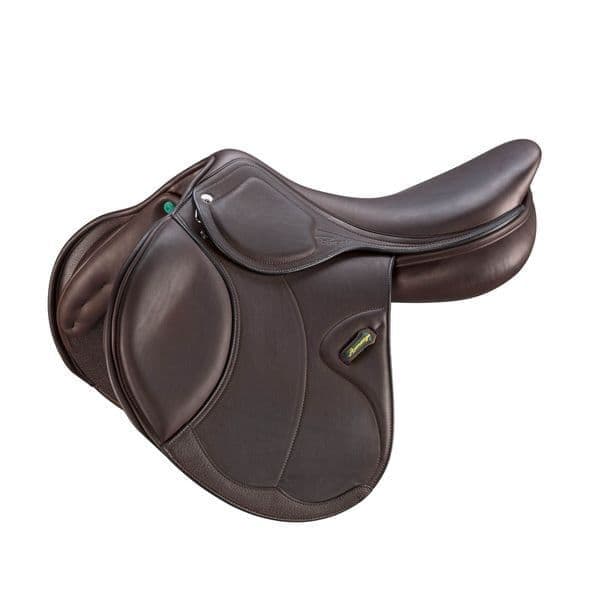
How Often Should You Check Your Saddle? 2026 Guide to Saddle Fit, Horse Comfort & Safety
A well-fitted saddle is essential for your horse’s comfort, performance, and long-term soundness. Yet many riders still underestimate how frequently saddle fit should be checked — and the answer varies depending on your horse’s workload, age, condition, and the type of saddle you use.
This guide explains how often to check saddle fit, what affects the frequency, and why professional assessments matter for both horse welfare and rider performance. Browse our Saddle Showroom or find out more about our saddle fitting services.
How Often Should You Have Your Saddle Checked?
The frequency depends on your horse’s workload, condition changes, and the saddle’s construction.
Competition Horses (Dressage, Eventing, Showjumping)
High-performance horses change shape rapidly due to training intensity.
-
Every 4–6 weeks for elite competition horses
-
Every 3 months as a maximum
-
Every 6 months, only if out of season or in reduced work
These horses experience frequent changes in topline, muscle development, and condition, which can alter saddle balance and flocking distribution.
Seasonal Changes: Why 6-Month Checks Are the Minimum
Even leisure horses benefit from twice-yearly checks — typically in spring/summer (weight gain, increased work, richer grazing) and autumn/winter (weight loss, reduced work, rugging changes).
Horses often fluctuate in condition between seasons, affecting gullet width suitability, panel contact, saddle balance, and shoulder freedom.
Why Your Saddle Fitter Templates Your Horse
A professional saddle fitter will template your horse’s back during each visit. This creates a record of wither shape, back curvature, muscle symmetry, and shoulder development.
If problems arise later, a second template allows comparison to identify muscle loss, asymmetry, condition changes, and saddle pressure areas. This is essential for evidence-based adjustments.
Flocked Saddles: When Do They Need Attention?
Flocked saddles require regular maintenance because wool flocking compresses with use, moves within the panel, and loses spring over time.
Signs your saddle may need a re-flock or top-up include hard or lumpy panels, the saddle dropping at the front, increased movement or instability, and new pressure points. A full re-flock is typically needed every 18–36 months, depending on use.
Buying a New Horse? Don’t Assume the Saddle Fits
Many riders buy a horse with its existing saddle, assuming it must fit because the horse is ridden in it. This is a common — and risky — misconception.
Potential issues include pinching by saddle tree points causing shoulder soreness, incorrect gullet width leading to imbalance, old flocking creating pressure points, and outgrown saddles on young horses.
Young horses in particular change shape rapidly, and an ill-fitting saddle can cause resistance under saddle, shortened stride, bucking or tension, difficulty bending, and behavioural issues mistaken for naughtiness.
Existing Horses: Why Fit Changes Over Time
Even mature horses change shape due to increased training, muscle development, weight gain or loss, changes in diet, injury or time off, and age-related muscle loss. Any of these can make a previously well-fitting saddle suddenly unsuitable.
Can You Assess Saddle Fit Yourself?
Short answer: not fully. You can check basic indicators, but a complete assessment requires watching the horse in motion, evaluating saddle stability, assessing dynamic balance, identifying subtle asymmetries, and understanding tree shape versus horse shape. A saddle may appear to fit when the horse is standing still, yet be completely wrong once the horse begins to move.
Why Saddle Slip Happens (and Why It Matters)
Saddle slip is not normal and is often a sign of poor saddle fit, incorrect girth shape or length, worn or slick saddle pads, horse conformation challenges, or hindlimb lameness (a scientifically proven cause). If your saddle consistently slips to one side, it may indicate pain or lameness, not just a tack issue.
The Rider Matters Too
A saddle must fit both horse and rider. A saddle that fits the horse but not the rider can cause balance issues, incorrect leg position, rider instability, and increased pressure on the horse’s back. Rider height, leg length, pelvis shape, and riding discipline all influence the correct saddle choice.
Different Saddle Trees for Different Horses
Modern English saddles use a variety of tree designs to accommodate high withers, broad backs, asymmetry, shoulder rotation, short backs, and wide ribcages. Choosing the correct tree shape improves shoulder freedom, back lift, straightness, engagement, and rider balance — especially important for dressage and jumping horses.
Static vs Dynamic Fit: Why Movement Matters
Fitting a saddle on a motionless horse is only half the job. A correctly schooled horse will lift through the back, expand through the ribcage, rotate the scapula, and change the shape of the topline during work. A saddle must be fitted for movement, not just for standing still.
Ian Taft
Society of Master Saddlers Qualified SMSRegQSF Saddle Fitter – Saddlemasters Saddles – Saddle Brands - Amerigo, Equipe, Albion, Fairfax, Kent and Masters, Prestige, Pessoa, GFS,
Approved & Authorised Dealer