
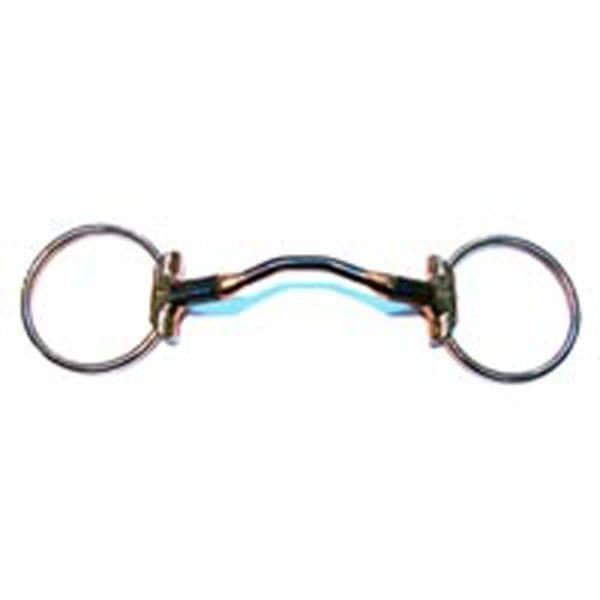
Bombers Happy Tongue Eggbutt Loose Ring Bit – Advanced Tongue Relief with Loose Ring Sensitivity
The Bombers Happy Tongue Eggbutt Loose Ring Bit combines the stability of an eggbutt cheekpiece with the responsive feel of a loose ring, creating a unique bit design that offers enhanced comfort, clearer communication, and improved rider control.
Designed for horses that require additional tongue relief and riders seeking a softer, more refined contact, this innovative bit from our Bombers Bits collection delivers the benefits of two popular cheekpiece styles in one ergonomic solution.
What Is the Bombers Happy Tongue Eggbutt Loose Ring Bit?
The Bombers Happy Tongue Eggbutt Loose Ring is a ported solid mouthpiece bit designed to maximise tongue space while maintaining gentle and consistent contact across the bars of the mouth.
Its hybrid cheekpiece design combines:
-
The stability and anti-pinch protection of an eggbutt
-
The mobility and quick-release action of a loose ring
This creates a highly versatile bit suitable for sensitive horses, horses that lean on the contact, and riders looking for a softer yet more responsive feel.
Key Benefits of the Bombers Happy Tongue Eggbutt Loose Ring
Maximum Tongue Relief
The defining feature of the Happy Tongue mouthpiece is its carefully shaped port, which provides significant tongue relief compared to traditional straight bar or jointed bits.
Many horses use their tongues to cushion and protect the sensitive bars of their mouths. When insufficient space is available, horses often develop resistance behaviours such as:
-
Opening the mouth
-
Pulling against the contact
-
Leaning
-
Head tossing
-
Tension through the topline
The Bombers Happy Tongue design creates additional room for the tongue, helping the horse relax and accept the contact more willingly.
Ergonomic Pressure Distribution
Unlike a traditional straight bar that can create concentrated pressure across a smaller area of the bars, the curved Happy Tongue mouthpiece distributes rein pressure more evenly across the mouth.
This ergonomic shaping allows the bit to align more naturally with the horse's oral anatomy, producing:
-
Softer pressure application
-
Improved comfort
-
Reduced anxiety in the contact
-
Better acceptance of rein aids
The flattened central port also helps minimise the risk of palate interference while maximising tongue space.
Hybrid Eggbutt Loose Ring Design
The innovative sidepiece combines two highly desirable characteristics.
Eggbutt Benefits
The eggbutt element:
-
Prevents lip pinching
-
Provides greater lateral stability
-
Creates a more secure feel against the side of the face
-
Helps prevent the bit from being pulled through the mouth during evasions
This makes the bit particularly beneficial for horses with:
-
Large or fleshy lips
-
Sensitive mouth corners
-
Narrow mouths prone to pinching
Loose Ring Benefits
The loose ring action introduces greater movement and responsiveness into the contact.
Loose rings are highly valued because they allow:
-
Faster release of rein pressure
-
More refined communication
-
Reduced fixation on the contact
-
Increased softness through the hand
This quick-release action can be particularly effective for horses that:
-
Lean heavily on the rider's hand
-
Grab or fix against the bit
-
Become tense in static mouthpieces
Subtle softening of the rider's wrist allows the loose ring to disengage pressure quickly, encouraging the horse to relax rather than brace.
No Poll Pressure Action
The Bombers Happy Tongue Eggbutt Loose Ring acts directly within the mouth without introducing poll pressure.
This can be especially beneficial for horses that:
-
Object to poll pressure
-
Become tense in leverage bits
-
Prefer a simpler snaffle action
-
Need confidence in the contact
For sensitive horses, reducing unnecessary poll influence often helps produce a more relaxed outline and improved way of going.
Designed for Sensitive Bars of the Mouth
The bars of the horse's mouth are extremely sensitive structures, particularly in finer breeds such as Thoroughbreds, where minimal gum tissue covers the jawbone.
The 14mm mouthpiece thickness has been carefully designed to provide:
-
Adequate surface area to reduce concentrated pressure
-
Enough substance for stability
-
Minimal intrusion into the limited mouth space
This balance is important because excessively thick bits can overcrowd the mouth and increase discomfort, especially in horses with low palates or fleshy tongues.
How the Happy Tongue Mouthpiece Works
When rein pressure is applied, the bit initially acts more directly on the bars of the mouth while maintaining tongue relief through the ported centre.
If the horse ignores the initial bar pressure, additional tongue pressure gradually follows as the contact increases.
This progressive action helps:
-
Reduce anxiety in the contact
-
Improve clarity of communication
-
Encourage self-carriage
-
Prevent defensive reactions
The horse learns to respond softly before stronger pressure develops, promoting lighter communication between horse and rider.
Ideal Uses for the Bombers Happy Tongue Eggbutt Loose Ring
This bit is particularly suitable for:
-
Sensitive horses
-
Horses with fleshy tongues
-
Horses that dislike tongue pressure
-
Horses prone to leaning or fixing
-
Thoroughbreds and fine-mouthed horses
-
Horses with lip pinch sensitivity
-
Riders wanting refined loose ring action without instability
It is commonly used across multiple disciplines, including:
-
Dressage schooling
-
Showjumping
-
Eventing
-
Flatwork
-
General riding
Features at a Glance
-
Ported Happy Tongue mouthpiece
-
Hybrid eggbutt loose ring cheekpiece
-
Excellent tongue relief
-
Anti-pinch design
-
Quick-release loose ring action
-
No poll pressure
-
Ergonomic curved mouthpiece
-
Flattened port to reduce palate interference
-
14mm mouthpiece thickness
-
Encourages relaxation and softness
Final Thoughts
The Bombers Happy Tongue Eggbutt Loose Ring Bit offers a highly intelligent combination of comfort, responsiveness, and control. By blending the stability of an eggbutt with the sensitivity of a loose ring, Bombers has created a bit that supports softer communication while protecting the horse's mouth from unnecessary pressure and pinching.
Its ergonomic Happy Tongue mouthpiece provides valuable tongue relief and encourages relaxation, making it an excellent choice for horses that struggle with conventional bit designs.
For riders seeking a refined contact with improved comfort and responsiveness, explore the full Bombers Bits collection for more horse-friendly solutions.