
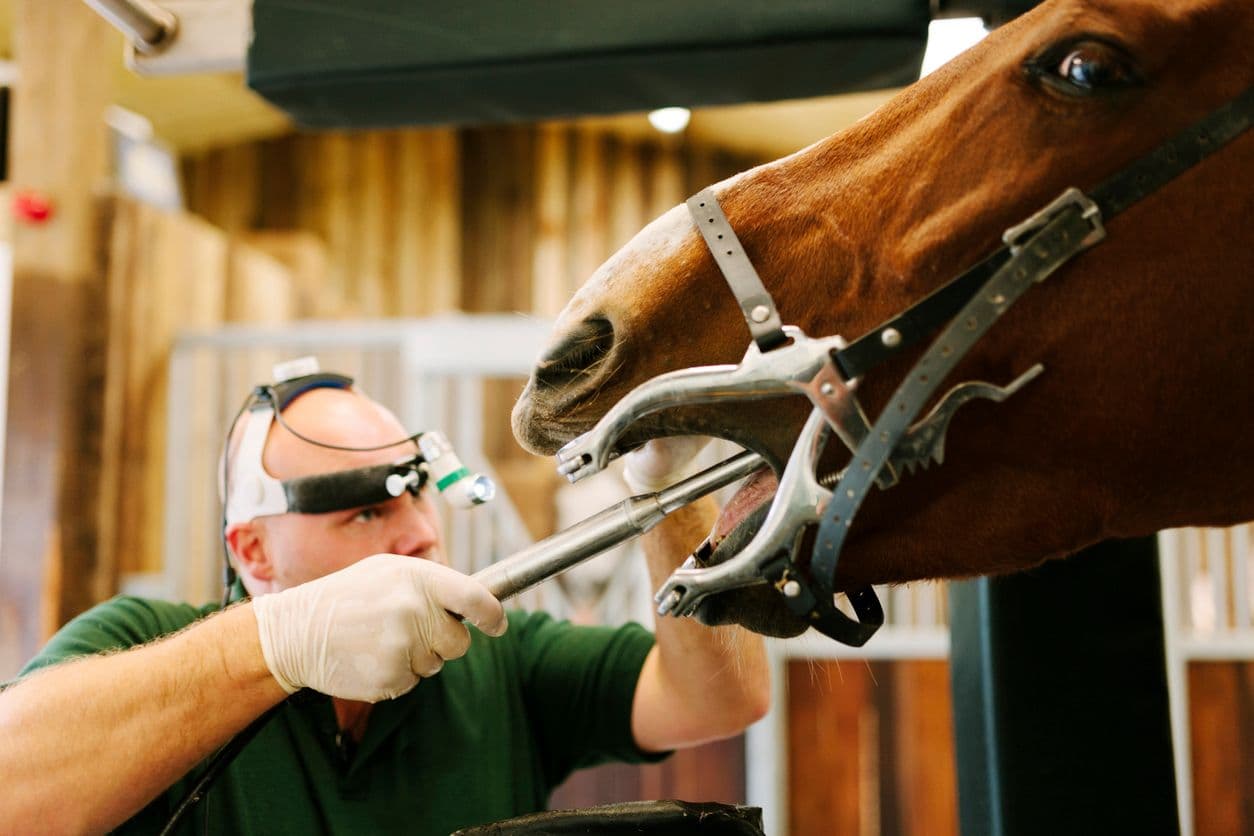
Horse Bitting Issues: Why Regular Equine Dental Care Matters
Poor performance, resistance to the bit, head tossing, and difficulty accepting contact are often blamed on “bitting issues.” However, in many cases, the real problem starts inside the horse’s mouth. Regular examinations by a qualified equine dentist are essential for your horse’s comfort, welfare, and performance under saddle.
Why Choosing a Qualified Equine Dentist Matters
One of the biggest concerns for horse owners is knowing whether the person examining their horse’s mouth is genuinely qualified and competent.
In the UK, anyone can legally describe themselves as an “equine dentist” provided they only carry out basic procedures such as rasping sharp enamel points. This means that without recognised qualifications and professional registration, there is no guarantee of training, competency, or insurance cover.
For horse owners, this creates an important question:
Is the person treating your horse properly trained to identify and manage complex dental problems?
Understanding Equine Dental Qualifications in the UK
The Royal College of Veterinary Surgeons (RCVS) recognises that specialist equine dentistry requires advanced training and assessment. Certain procedures fall under the Veterinary Surgeons Act 1966 and may only be performed by veterinary surgeons or by suitably qualified Equine Dental Technicians (EDTs) who hold recognised exemption certificates.
These exemptions are awarded only after rigorous practical and theoretical examinations approved by DEFRA and endorsed by the RCVS.
The two recognised professional organisations in the UK are:
- Worldwide Association of Equine Dentistry (WWAED)
- British Association of Equine Dental Technicians (BAEDT)
Both organisations maintain professional registers of qualified Equine Dental Technicians.
Level 1 vs Level 2 Equine Dentists
Not all qualifications are equal, so horse owners should always ask what level of certification their equine dentist holds.
Level 1 Certification
A Level 1 certified Equine Dental Technician is qualified to carry out routine dental procedures commonly required by most horses, including:
- Removal of sharp enamel points
- Basic balancing of teeth
- Routine oral examinations
These practitioners have been assessed for competence and are often working under mentorship toward higher qualifications. They are generally insured and operate within a professional code of ethics.
Level 2 Certification
Level 2 certified Equine Dental Technicians have passed Category 2 exemption examinations recognised by DEFRA and endorsed by the RCVS.
This qualification allows them to carry out more advanced procedures and manage more complex dental conditions safely and legally.
For owners dealing with performance issues, suspected pain, or advanced dental abnormalities, a Level 2 qualified practitioner is often the most appropriate choice.
How Horse Teeth Differ from Human Teeth
Horse teeth are very different from human teeth. Horses have hypsodont teeth, meaning their incisors and cheek teeth continue erupting throughout much of their lives.
Typically, horse teeth can erupt between 2mm and 6mm every six months. Because of this continual eruption, regular dental maintenance is essential.
The horse’s upper jaw (maxilla) is naturally wider than the lower jaw (mandible). During the horse’s circular chewing motion, this uneven alignment causes the cheek teeth to wear unevenly over time.
As a result:
- Sharp enamel points develop on the outside of the upper cheek teeth
- Sharp enamel points develop on the inside of the lower cheek teeth
Without treatment, these sharp edges can cut into the cheeks and tongue, causing significant discomfort.
The Link Between Dental Pain and Bitting Problems
Many so-called bitting issues are actually pain responses caused by untreated dental problems.
Imagine a horse with sharp upper molar edges cutting into the cheeks. When a tight noseband is fitted, the soft cheek tissue is pressed directly against those sharp points, increasing pain and discomfort.
Similarly, sharp lower molar edges can cut into the tongue, causing the horse to evade contact or resist the bit.
Common signs of dental-related bitting problems include:
- Head tossing
- Resistance to contact
- Opening the mouth
- Leaning on the bit
- Tilting the head
- Difficulty bending
- Excessive salivation
- Quidding (dropping food)
- Bad breath (halitosis)
- Poor performance under saddle
In many cases, the issue is not the bit itself — it is oral pain.
Common Equine Dental Problems
A qualified equine dentist is trained to identify and manage a wide range of dental issues, including:
Sharp Enamel Points
The most common issue caused by uneven tooth wear.
Retained Caps
Young horses shed deciduous (milk) teeth as permanent teeth erupt. Retained caps can cause pain, swelling, and difficulty eating or accepting the bit.
Wolf Teeth
Wolf teeth can interfere with the bit and may require removal by a qualified professional.
Diastema
Small gaps between teeth can trap food, leading to painful infection and periodontal disease.
Periodontal Disease
One of the leading causes of oral pain in horses is food impaction and bacterial infection.
Hooks, Ramps, and Wave Mouths
Abnormal wear patterns can restrict jaw movement and affect chewing efficiency and comfort under the saddle.
Why Routine Dental Care Is Essential
Routine dental examinations are not just about comfort — they are essential for your horse’s health, welfare, and performance.
Regular treatment helps:
- Improve comfort under saddle
- Reduce resistance to the bit
- Prevent painful ulcers and cuts
- Improve chewing efficiency
- Reduce the risk of periodontal disease
- Detect problems early before they become severe
Most horses should receive a dental examination at least once every 6–12 months, although younger and older horses may require more frequent checks.
Final Thoughts
When a horse shows signs of discomfort with the bit, it is important not to assume the tack is the problem. Oral pain is one of the most common underlying causes of behavioural and performance issues.
Choosing a properly trained and recognised Equine Dental Technician ensures your horse receives safe, professional, and legally compliant care.
Before booking an appointment, always check the practitioner’s qualifications, registration status, and certification level.
Find a Qualified Equine Dentist
You can search the professional member directories here: